
FxPro Raw+ Live Spreads — Measured, Not Advertised | Kenya 2026
Real spreads we recorded on FxPro’s own MetaTrader 5 Raw+ feed — 6 instruments, 3,714,831 ticks sampled, last captured 2026-09-17. The spread you actually trade on, not a marketing ‘from 0.0’.
Open FxPro Account →A spread is quoted in pips but it leaves the account in dollars, and the conversion is the part worth doing before you fund. On EUR/USD one pip is worth about $10 on a standard lot, $1 on 0.1 lots and $0.10 on 0.01 lots, so today's measured figure becomes a cash number as soon as you know your size. On Raw+ and cTrader that is only half the entry cost: $3.50 per lot per side is charged on top, once on the open and once on the close. The measured tables on this page are the input; your position size is the multiplier.
This is the live, hour-by-hour measured spread feed (refreshed daily). For the Standard vs Raw+ cost comparison and fees, see our spreads & costs page.
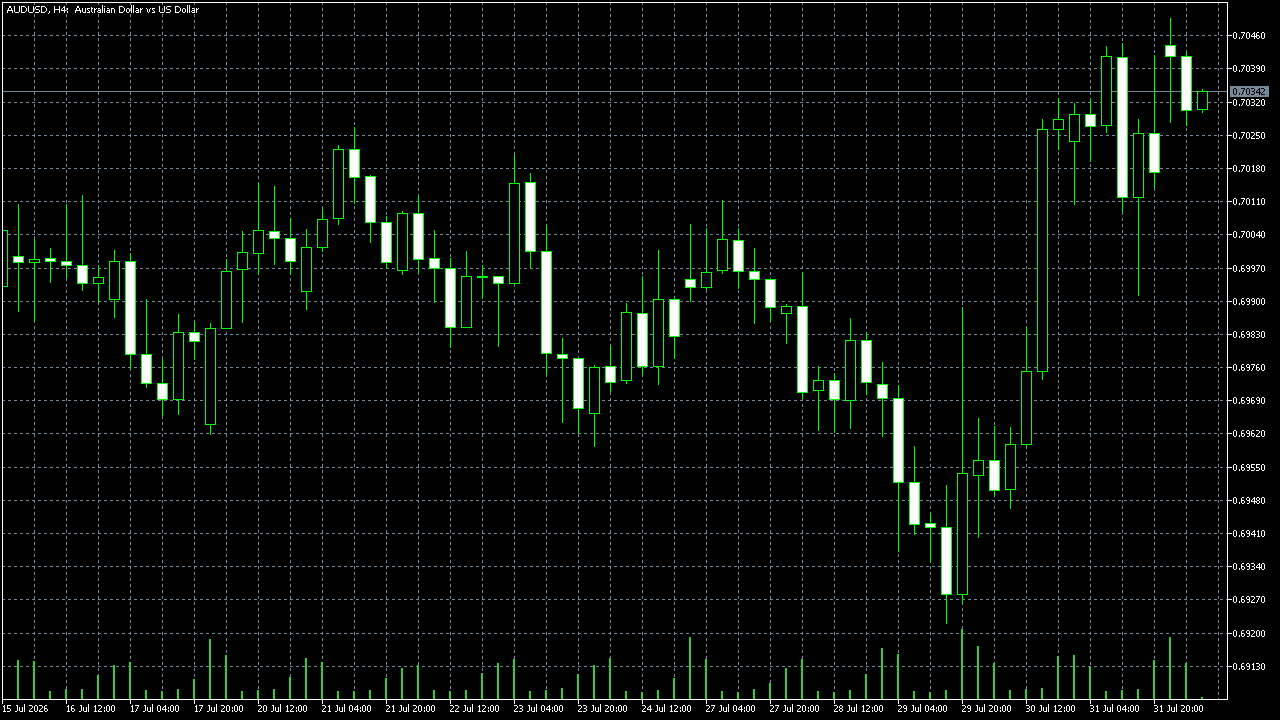
Measured Raw+ spreads (pips)
| Instrument | Best (min) | Typical (median) | Busy market (p90) | At capture | Ticks sampled |
|---|---|---|---|---|---|
| EUR/USD | 0.1 | 0.2 | 0.2 | 0.2 | 457,098 |
| GBP/USD | 0.6 | 0.6 | 0.6 | 0.6 | 590,492 |
| AUD/USD | 0.2 | 0.4 | 0.8 | 0.4 | 511,715 |
| USD/CAD | 0.1 | 0.4 | 0.5 | 0.4 | 465,429 |
| USD/JPY | 0.3 | 0.3 | 0.5 | 0.3 | 717,421 |
| XAU/USD (Gold) | 15 | 15 | 19 | 15 | 972,676 |
Best = the tightest quiet-market quote we saw; Typical = the median you usually trade; Busy market = the wider spread to expect about 10% of the time (news, rollover, thin liquidity). ‘At capture’ is the live spread at the last reading. Metals such as XAU/USD use a different contract size, so their cash cost is on our gold page. Server FxPro-MT5 Demo, feed 2026.09.15 14:10:41.
Spread through the trading day (measured, last 24h)
| Instrument | Tightest (avg) | Widest (avg) | Worst spike | Through the day |
|---|---|---|---|---|
| EUR/USD | 0.2 (03:00) | 1.782 (00:00) | 9.5 (00:00) | |
| GBP/USD | 0.6 (03:00) | 3.627 (00:00) | 15 (23:00) | |
| AUD/USD | 0.292 (14:00) | 3.98 (00:00) | 25 (23:00) | |
| USD/CAD | 0.292 (09:00) | 2.318 (00:00) | 13.6 (23:00) | |
| USD/JPY | 0.3 (09:00) | 7.082 (00:00) | 16 (23:00) | |
| XAU/USD (Gold) | 15 (09:00) | 75.421 (00:00) | 175 (00:00) |
Table hours are FxPro server time (about UTC+3 / EET); the highlighted guidance above is shown in EAT. Average pip spread by hour over the last 24 hours, with the worst single-tick spike. Spreads run tightest in the peak London–New York overlap and widen around the 00:00 server rollover and the thinner Asian hours — the sparkline is each instrument’s daily shape.
What it costs you per lot (Raw+)
| Instrument | Typical spread | Spread cost / lot | Commission (round turn) | All-in / lot | All-in (pips) |
|---|---|---|---|---|---|
| EUR/USD | 0.2 pips | $2.00 | $7.00 | $9.00 | 0.9 pips |
| GBP/USD | 0.6 pips | $6.00 | $7.00 | $13.00 | 1.3 pips |
| AUD/USD | 0.4 pips | $4.00 | $7.00 | $11.00 | 1.1 pips |
| USD/CAD | 0.4 pips | $2.87 | $7.00 | $9.87 | 1.37 pips |
| USD/JPY | 0.3 pips | $1.94 | $7.00 | $8.94 | 1.38 pips |
| XAU/USD (Gold) | 15 pips | $15.00 | $7.00 | $22.00 | 22 pips |
All-in round-turn cost for one standard lot (100,000 units): typical spread × pip value, plus the $7 Raw+ commission ($3.50 per lot per side ($7.00 round turn) on Raw+ and cTrader accounts). On a Standard account you pay a wider spread instead of that commission — see the full spreads and costs page.
Open FxPro Account →Advertised ‘from 0.0’ vs what we measured
FxPro markets Raw+ as spreads ‘from 0.0 pips’ — a best-case floor. Across our sample the tightest EUR/USD quote we recorded was 0.1 pips and the typical was 0.2 pips. That is normal: the ‘from’ figure is a floor you rarely trade on, so judge a Raw+ account by its typical spread and how far it widens under load (the p90 column), not the headline number.
How we measured this
- Recorded on FxPro's own MetaTrader 5 Raw+ account — the broker's real pricing feed, not a third-party estimate.
- Captured in-terminal by an MQL5 expert advisor that logs every tick's bid and ask, so the spread is exactly what the platform shows.
- 3,714,831 ticks across 6 instruments; the figures refresh on a schedule.
- Demo and live Raw+ share the same pricing feed, so these spreads are representative of a funded account.
Spreads are variable and widen around high-impact news and the daily rollover. Past readings do not guarantee future spreads. Last updated 2026-09-17.
Reading today's number as money
Everything on this page is measured on a live Raw+ terminal, which makes it a price list rather than a claim. What it does not know is your position size, and that is what turns a spread into an amount. Multiply the median figure for your instrument by the pip value at your size and you have the cash the entry costs; do it once for the size you actually trade and the number stays useful all month.
The hourly profile matters for the same reason. A spread that widens around the rollover and in thin hours is a spread that charges more for an identical order, so the local hour you choose is a cost decision. If your routine puts you at the screen in the Nairobi afternoon, the measured shape above is telling you that this is the cheaper end of the day.
The all-in column already does part of the arithmetic for a standard lot by adding the commission to the spread. Scale it to your own size rather than reading it as the price of trading: a tenth of a lot pays a tenth of it, and the 0.01-lot minimum pays a hundredth. See spreads for the Standard comparison and Raw+ for the commission line on its own.
What a measured spread does not cover
The entry cost is the first of four things that take money from a Kenyan FxPro account, and this page measures only that one. The commission on raw-pricing accounts is fixed and predictable, the overnight swap arrives at every rollover a position survives, and an inactivity fee applies after 6 months of no activity on the account.
None of those appear in a spread reading, which is why a cheap-looking quote can still add up to an expensive month. A position held for a week meets the spread once and the rollover every night; a trader who is in and out many times a day meets the spread and the commission constantly and the rollover never. The measured number tells you which of those two patterns an instrument suits.
The route in and out is unaffected by any of it. The minimum deposit is $100, funds land in the FxPro Wallet before you move them to the trading account, and a payout returns by the method the deposit arrived on. See swap rates for the nightly line and trading hours for when each charge lands in EAT.
A feed that refreshes daily, a balance that moves on business days
Two rhythms run under this page. The spread readings are captured continuously and republished on a daily cycle, so the number in front of you is close to what the terminal is quoting. Money moves on a slower and much less even clock: card and e-wallet transfers are usually credited within about 10 minutes, while an international bank wire takes 3 to 5 business days and knows nothing about how fast a spread changes.
Confusing the two produces the most common planning error on a new account. Reading a tight measured spread and deciding to trade this afternoon is reasonable; assuming the money to trade it with will be there by then is not, unless you funded by a route that settles in minutes. The measurement is live, the funding is not.
There is a step between them that has no clock at all. A deposit lands in the FxPro Wallet and reaches the trading account only when you move it across, so a balance can be fully settled and still unavailable to trade. Verification sits earlier in the same chain and has to be complete before a withdrawal is processed, which is why this site puts documents before the first deposit rather than after it.
The figures are in dollars; your account may not be
Every number on this page is quoted in US dollars because the instruments are. Your account does not have to be. FxPro states that Kenyan clients can hold and fund an account in Kenyan shilling, and whichever base currency you pick is the one your balance, your commission and your swap are expressed in from then on.
That is a decision to make before the first deposit rather than after, because it changes what you are reading here. A dollar figure for an entry cost is a fixed input; what it comes to in your own balance depends on the rate at the moment it is applied, and on nothing this page can measure.
The conversion itself is a matter for whoever performs it. FxPro states that it charges no deposit fee and no withdrawal fee on most methods, so anything taken off the top when money crosses currencies belongs to your bank or payment provider. Ask them what they apply before you send the first transfer, not after the payout.
From a measured pip figure to what your trade costs
- Pick the instrument and read its median spread from the measured table above.
- Take the pip value for your size: about $10 per pip on one EUR/USD lot, $1 on 0.1 lots, $0.10 on 0.01 lots.
- Multiply. That is the entry cost in cash, taken the moment the order fills.
- On Raw+ or cTrader add $3.50 per lot for the open and the same again for the close.
- Check the hourly profile: if you trade outside the busy hours, use the wider figure rather than the median.
- Add one swap for every night the position will stay open, and three for a Wednesday.
Measured figures describe what the feed recorded; the spread you trade on is the one live in your platform at that moment.
The same measured spread at four position sizes
| Position size | Value of one pip | Cost of a 1-pip spread | Raw+ commission, round turn |
|---|---|---|---|
| 1.00 lot | About $10 | About $10 | $7.00 |
| 0.50 lot | About $5 | About $5 | $3.50 |
| 0.10 lot | About $1 | About $1 | $0.70 |
| 0.01 lot | About $0.10 | About $0.10 | $0.07 |
A one-pip example so the scaling is easy to reuse; substitute the measured figure for your own instrument from the table above. Pip values are approximate for USD-quoted majors.
How fast each part of the account actually moves
| What moves | How often | Who controls it | Why it matters here |
|---|---|---|---|
| Measured spread readings | Captured live, republished daily | Our own terminal | The number you cost a trade with |
| The spread you are charged | Continuously | The market | The measured figure is the guide, not the receipt |
| Card or e-wallet deposit | Usually about 10 minutes | The payment provider | Funds available the same session |
| Bank wire deposit | Same business day locally, 3 to 5 days internationally | The banks | Fund earlier than you plan to trade |
| Wallet to trading account | Only when you move it | You | A settled deposit can still be untradeable |
| Withdrawal | 24/5, usually within one business day | FxPro, then your provider | Same method as the deposit, always |
Deposit and payout timings are what FxPro states for its own processing; measurement cadence is ours.
What this page measures, and what your own account decides
| Input | Where it comes from | Fixed or your choice |
|---|---|---|
| Spread in pips | Our measurement of the live Raw+ feed | Fixed by the market |
| Commission per lot | FxPro pricing on Raw+ and cTrader | Fixed at $3.50 per side |
| Position size | You, in 0.01-lot steps | Your choice |
| Pip value in dollars | Position size and the instrument | Follows your size |
| Base currency of the balance | Chosen when the account is opened | Your choice, once |
| Rate applied when money crosses currencies | Your bank or payment provider | Outside both the feed and the broker |
Deposits and most withdrawals carry no broker fee, according to FxPro; a provider's own charges are separate.